Posts

Showing posts with the label Reading

Extra Credit Reading Notes: LibriVox Part A

Image
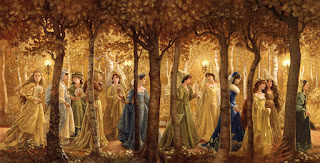
For my final reading in this class I decided to do it over the LibriVox unit. This unit had all kinds of fun stories like Rapunzel, Briar Rose (sleeping beauty), the Frog Prince, and the Twelve Dancing Princesses. It also had stories that I have not heard before like The Straw, The Coal, and The Bean.  I also liked how short these stories were. They were all only 1 page long. The language was contemporary English which made it easy to read. There was lots of personification in these stories which made them extra fun. The frog for example could talk to the princess.  There were several rhymes in the stories too which gave it rhythm and style. My favorite had to be the Twelve Dancing Princesses, but I am very biased because that was one of my favorite stories to hear growing up. I even had a movie about it that was produced by Barbie.  Overall, I am very satisfied with this being my last reading. It was fun. It was creative. It was everything I thought it would be when I h...

Reading Notes: Jacobs Part A

Image
I was so pleased reading the Jacobs unit because it had all of the old fairy tales like Cinderella, Beauty and the Beast, and Puss in Boots but they are written in modern language which made it a whole lot easier to read than the other unit I did in Week 14.  The Cinderella story in this unit was called Cinder-Maid which I thought was clever since Cinderella was basically just the house maid by her step-sisters and her mother. However, the shoe that Cinderella lost was a golden shoe which is different from the other stories I have read.  The Beauty and the Beast story was very similar to the other ones I have read and the one that I used to create my own version of Beauty and the Beast. The daughter's name was Bella which is very close to the Disney version where her name is Belle. In the story, instead of there being a tea cup and candlestick that moved and talked, there were invisible hands. The beast appeared to have died at the end of the story, however the hide had split ...

Reading Notes: Lang II Part A

Image
Since I enjoyed the Lang I reading from week 14, I figured I would look at the Lang II for this week's reading.  My favorite reading from this section was Toads and Diamonds . This story was about a mother and two daughters. The mother favored one daughter over the other and treated the other very poorly. Her mother's bad actions came back to bite her in the booty because when she sent the daughter she disliked to fetch some water, the daughter was granted a wish by a fairy for being so kind. The mother saw that her daughter now spilled jewels and pearls from her mouth when she spoke, so she sent her favored daughter to go get blessed by the fairy. The fairy, however, knew the mother would be greedy and do that so she instead cursed the favored daughter and make snakes and toads come from her mouth when she spoke.  This type of story has a life lesson with it. Treat others with kindness and you will be rewarded. The mistreated daughter had no idea that the old woman whom she w...

Reading Notes: Lang I Puss in Boots (extra credit since I missed the deadline)

Image
Since I missed my second reading for this week I decided to use the extra credit option to make up for it. I chose to do the reading over Lang I because it involved stories like "Puss in Boots" which I recognized from Shrek. I thought it would be neat to learn where the original came from and how it compares to the story I grew up with.  Puss in Boots originated in France which I had no idea of. The language is old and instead of saying donkey they say "ass". You can also tell how old the original is because it talks about things like the "mill". I thought it was interesting that Puss in Boots could talk to his master in English. This personification was very similar to Shrek. What was different in this story was that the cat was getting money so his master would not lose his home. In Shrek, Puss in Boots was just a good little thief.  Puss in Boots used his cleverness to trick the King and steal his clothes. This turned into a little trickster story which...

Reading Notes: Brothers Grimm Part A

Image
I decided to do this section for the reading today because it included stories like Cinderella (which is called aschenputtel) and Snow White.  This unit actually had 4 different units in different languages which is exactly like Europe with the many different places and cultures. I really enjoyed the Europe readings and this is probably one of my favorite units we have done this far. It had imagery, personification, magic, and lots of creativity.  I love fairytales, so I figured this would be a fun reading to do. Aschenputtel was very easy to read, but did contain some words that I was not familiar with like kirtle. This is definitely because of the European culture that these stories originated from.  These stories were also very fairy tale oriented which I did not mind. This Grimm unit really had it all when it came to stories which would make it really fun to write a story over. It had humor, romance, and the classics.  I will probably end up doing Part B for the ...

Reading Notes: Through the Looking Glass Part A

Image
For the second reading this week I have chosen to do it over Through the Looking Glass.  This reading was basically one long story broken up into what you could call "chapters". The story is basically continuing off of Alice in Wonderland. There was a continuous theme because most of the characters were chess pieces like "the red queen" and the "white king".  Most of the "chapters" were linked which means the stories were longer than normal, but they were so fun to read that I did not mind.  This reading also included the famous Humpty Dumpty and Tweedledee and Tweedledum. This reading had a bunch of personification and imagery in it which made reading it so fun. The creativity of the entire story was evident, and I found myself wanting to read more and more!  I think it would be fun to add my own twist to some of this story to make it my own. Perhaps I will do that for the project this week!  This photo is by Uncorked Canvas Bibliography: Author...

Reading Notes: Beowulf Part A/B

Image
I chose to read Beowulf for the second reading this week. This is a hero story (which I love). All of the small stories from this category were written as poems which made them pretty easy to read and fun. My favorite part about Beowulf was his battles. He first had to battle a monster named Grendel who was terrorizing his home. Beowulf bravely went and tore his arm from his body (that is one strong man), but then Grendel's mate came to avenge his death so Beowulf once again had to battle to protect his people. I thought the story was over when he then defeated Grendel's mate, but then a dragon came into the story because someone stole his treasure.  You can tell in these older British and Celtic stories that battle or war is a very common theme with them which makes sense because that is exactly what was happening in the real world around these authors. The whole world was at war with each other; constantly fighting over land and resources. It seems like the only issues in the...

Reading Notes: Robin Hood Part A

Image
The section I decided to read from the British and Celtic unit was Robin Hood. I feel like a lot of people probably picked this story section because most of us have grown up hearing about the Robin Hood stories. These were very different than the ones I grew up hearing however.  Honestly, the only enemy that I recognized was the Sheriff of Nottingham. The others were brand new to me which was a nice surprise. I did not know what a ballad was before reading this unit. A ballad is basically short stanzas that tell a story that are passed on orally from one tradition to the next. It really gives a structure and a rhythm when reading. I really liked the ballad shape of writing over some of the other things I have read for this class. I also noticed that some of the stories had capitalized words or italicized words kind of randomly. Of course they were not random, but at first they seemed like it. They were really used for emphasis to show something important.  I also noticed that...

Extra Credit Reading: Week 11

Image
I failed to do the reading for this week so I am taking this extra credit reading to make up for the one I did not do. The Native American unit is the one that I used for this reading.  This story was from the Tejas Legends. I had no idea that there were Tejas Legends that originated from Texas! The Tejas Legends were very simple, but I liked that about them. The simplicity of these stories makes me think they are geared more towards children or young adults. These would be something that I think adults would tell children before bed. My favorite short story from this unit was How The North Wind Lost His Hair . The title of this one really grabbed my attention (although I do not like that the wind is masculine but not the point). These stories had a lot of personification which gives life the things that are not human. This is also what makes me think they are made for children to hear or read because it contains so much personification. I really like that about them and it made th...

Reading Notes: Congo Part B

Image
The Congo unit I read today had a couple patterns that were odd to me. The first was that the Congo unit had several fetishes mentioned in several of the stories. I did learn that these fetishes are representations of the different kinds of wind. There is the "boomba" which is the east wind, and the "lembe" which is the southwest wind. This is very different from most of the stories that you would read in the western hemisphere.  This unit was similar to the Nigerian unit because the Congo unit had lots of animals as the characters in the stories. These stories seem to explain the nature of things. Like the first story explained why leopards eat antelopes as soon as they meet one. Even though this story is a folktale, it helps to explain everyday experiences. These stories were also pretty short in length approximately 300-1000 words much like the Nigerian unit. I think this length is ideal to keep the audience engaged in the story. I know I typically get bored afte...

Reading Notes: Nigerian Unit Part A

Image
For this week's reading I chose to do the Nigerian Unit .  Most of the stories under this unit involve animals that engage in "foolish imitation" to trick another animal. These stories involve clever thinking and cunning actions. I think this is very similar to my story I created on my portfolio because I made the mouse trick the snake so he would not be eaten. My story did not combine both humans and animals thought. I think the eastern side of the world loves to tell folktales with animals. These folktales are short in length (about 300-1000 words) and sometimes have some humor in them. My favorite story from Part A was The King who Married the Cock's Daughter . The king married an animal which is not something we would typically see in our world today, but it was interesting to me that the king died from a broken heart. This folktale could be used to explain why it is that people do not marry animals (whether this be right or wrong).  I definitely enjoyed doing one...

Reading Notes: Santal Part A

Image
Each of these readings were very short which I really liked (around 300-700 words each). They had fun endings and lots of dialogue between characters. Most of these characters were animals I noticed. I think I get caught up in thinking that characters in stories have to be human which is definitely not true. My favorite story from these short stories has to be Ramai and the Animals. This story reminded me of some of the stories I heard when I was younger although I cannot remember the specific title. The sentences were structured using lots of semicolons which I really liked. I also noticed that these stories are broken up into small paragraphs. I think I should do more of this style in my portfolio so that it adds some structure to my stories.  Some of the stories were left on cliff hangers which I think just leaves the reading wanting more. As much as some readers don't like cliff hangers, I really like writing them. Most of these stories also started with the typical "once ...

Reading Notes: Czech Folktales Part B

Image
I loved the Czech readings that I did so much yesterday that I decided to continue reading part B for this second reading assignment!  The biggest difference I noticed in these stories is that there seems to be some on the side notes left by the author to further help the reader understand the story. For example, the first story read  "s o our Francis — that was his name, though really it doesn't matter very much what his name was — took everything he wanted and started off on his travels". I forgot the literary term for what this is called, but I really like the way it is used and will probably do something similar in my semester project. I feel like it adds a little character and makes the author involved in the story.  Anyways, again these stories have quite a bit of dialogue. It also has lots of adjectives which seem to bring the story to life (which I love). I've come to realize that I do not like stories that begin with "once upon a time". I think it i...

Reading Notes: Czech Folktales, Part A

Image
Sleep John was fun to read. There were many mythical creatures like dragons and kings and queens. There was also some humor in the story as well when John fell asleep in the cart with wolves. I definitely think this one was my favorite short story out of this entire collection of stories. I think it would be fairly easy to manipulate and make into my own story and I have several ideas started already. I would like to turn the cart from the story into a train. For example John would come across a parked train and hop in and fall asleep. In the train I would put snakes instead of wolves, and then I would change the type of forests that the Queen goes through. I think this story appealed to me so much because it is a spin off of the 12 dancing princesses which I grew up hearing from my grandmother. I even watched the movie that Barbie had some out about it.  I noticed that most of the folktales have lots of dialogue between characters, and they have almost magical qualities like the s...

Reading Notes: Noah and the Ark - Part A

Image
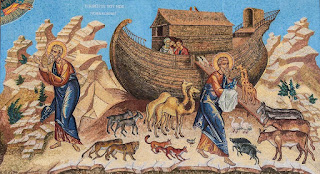
 The first part of Noah and the Ark is basically an overview of the story. It does not go into great detail, but introduces the backstory and the most important information to the story like when Noah was born. The second part of the story is when it begins to go in depth. This part describes the Flood very vividly, and includes some dialogue between Noah and God. The third part describes after the Flood. We predominantly focus on Noah and his actions during this part. The forth part of the story then talks about Noah's family. It quite literally breaks down his family tree and talks about each descendent. Then the Tower of Babel begins talking about life after the Flood, once Noah's children bore more children. However, the Lord was not happy with the men and decided to make them speak different languages so they could no longer communicate. Then the story takes a rather weird turn; it goes back to the beginning of the story about the birth of Noah. As of this moment the story...

Reading Notes: Beauty and the Basilisk

Image
Title: Beauty and the Basilisk Author: Josef Baudis (1922) Link:  https://sites.google.com/view/mythfolkloreanthology/fairy-tales?authuser=0 -start story with something to captivate audience -add enough details that the reader feels that they are involved in the story -give brief backstory if needed -add colorful pictures to better illustrate story -add dialogue between characters -maybe leave audience on a cliff hanger The basilisk and the weasel, by  Marcus Gheeraerts the Elder . The cockatrice (pictured) became seen as synonymous with the basilisk when the "basiliscus" in Bartholomeus Anglicus' De proprietatibus rerum (ca 1260) was translated by John Trevisa as "cockatrice" (1397).

Week 2 Reading Overview

Image
This will be my tentative reading schedule for the rest of this semester, and I have included the links to all of the stories so that they will be easier to find later.    Choose from  CLASSICAL and/or BIBLICAL units  for Weeks 3 and 4. Week 3:  Myth-Folklore Unit: Noah and the Ark Week 4:  Apuleius's Cupid and Psyche Choose from  MIDDLE EASTERN and/or INDIAN units  for Weeks 5 and 6. Week 5: Ancient Egyptian Myths and Stories Week 6:  Tutinameh, or Tales of a Parrot   Choose from  ASIAN and/or AFRICAN units  for Weeks 7 and 9. [Week 8 is review week.] Week 7: Nigerian Folk Stories Week 9:  Japanese Mythology Choose from  NATIVE AMERICAN units  for Weeks 10 and 11. Week 10:  Apache Tales Week 11:  Myths of the Cherokee Choose from  BRITISH and/or CELTIC units  for Weeks 12 and 13. Week 12: Ballads of Robin Hood Week 13:  Nursery Rhymes Choose from  EUROPEAN units  for Weeks 14 a...